Smilers Den
2 Hours Ago
320 MB
1.373
Android 5.0+
5M+
Images

Description
Do you crave horror experiences that rely on psychological tension rather than jump scares? Smilers Den delivers nerve-wracking gameplay through careful observation and resource management. This Android title tests your ability to remain calm under mounting pressure while juggling multiple survival priorities.
What is Smilers Den?
Smilers Den stands as an independently developed horror survival game that captures the essence of surveillance-based terror. The experience drops players into liminal spaces reminiscent of backroom environments, where familiar architecture becomes unsettling through isolation and threat.

Your role centers on completing overnight shifts within these abandoned facilities. Each session demands completing assigned objectives while simultaneously monitoring Karelia, a hostile presence that roams the premises. Success depends on balancing task completion against constant vigilance—ignore either aspect and the shift ends prematurely.
The developers focused on creating sustained dread rather than cheap shocks. Audio design plays a crucial role, with environmental sounds providing vital information about Karelia’s location and behavior patterns. Visual presentation embraces minimalism, using stark lighting and empty corridors to amplify feelings of vulnerability.
Core Gameplay Elements
Surveillance Camera Network
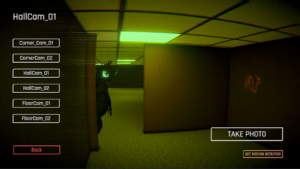
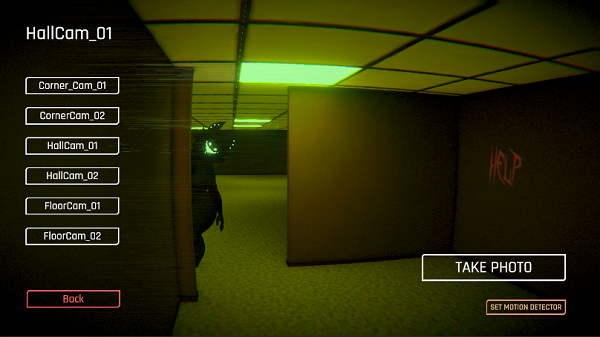
Multiple security feeds provide eyes throughout the facility. Players toggle between cameras to track movement and identify safe routes. Each camera covers specific zones, requiring mental mapping of blind spots and transition areas.
The monitoring interface displays feeds simultaneously, though clarity decreases with too many active windows. Learning which cameras matter most for current tasks becomes essential knowledge. Some areas lack coverage entirely, forcing calculated risks when traveling through dead zones.
Objective Management System
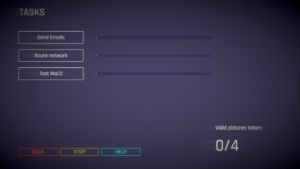
Every shift presents a checklist of required tasks. These range from collecting specific items to documenting unusual occurrences. Each objective pulls attention away from monitoring systems, creating deliberate tension between progress and safety.
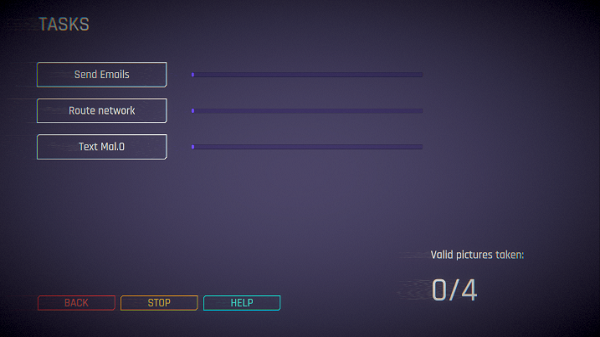
Task locations are spread throughout accessible areas. Planning efficient routes minimizes exposure time in vulnerable positions. Some objectives have time limits, adding extra pressure to already stressful situations.
Karelia Behavior Patterns
The primary threat follows semi-predictable movement logic based on player location and camera usage. Karelia responds to noise, light changes, and direct observation. Understanding these triggers helps players avoid confrontations.
Direct encounters typically result in immediate failure. The entity moves faster than players can react, making prevention the only viable strategy. Audio cues warn of approaching danger, giving brief windows to hide or change locations.
Environmental Audio Cues
Sound design functions as your primary early warning system. Distant footsteps indicate general direction and approximate distance. Metallic scraping sounds signal specific behaviors. Silence often proves more terrifying than noise, suggesting nearby presence without confirmation.
Headphones become practically mandatory for serious play. Subtle directional audio provides information that visual feeds miss. Learning to distinguish between ambient sounds and genuine threats takes practice but dramatically improves survival rates.
Resource Conservation Mechanics
Power supplies limit camera usage and lighting controls. Excessive monitoring drains batteries faster than they recharge. Players must decide which systems deserve continuous power versus periodic checks.
Flashlight usage follows similar restrictions. The beam reveals details cameras miss, but also broadcasts your position. Strategic darkness often provides better security than illuminated movement.
Getting Started with Smilers Den
Installation and Setup
Download Smilers Den through the Google Play Store. The application requires approximately 800MB of storage space. Initial load times may extend several minutes during the first launch as assets decompress.
Android version 7.0 or higher ensures compatibility. Devices with at least 3GB RAM provide smoother performance during intensive camera sequences.
Understanding the Tutorial
The opening shift functions as comprehensive training. You’ll learn camera controls, movement mechanics, and basic Karelia behavior without lethal consequences. Pay attention to audio examples provided—these sounds repeat throughout actual gameplay.
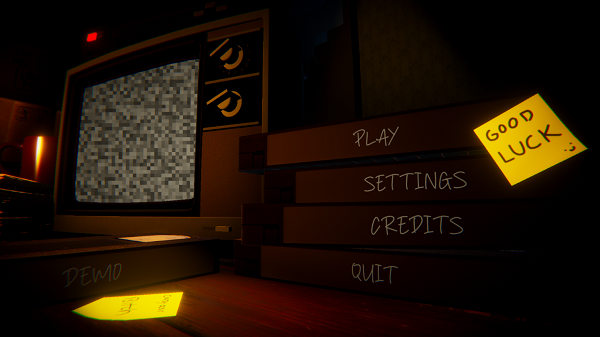
Tutorial completion unlocks standard difficulty mode. Rushing through this section handicaps future performance, as it establishes foundational knowledge for survival strategies.
Difficulty Selection Options
Standard mode provides a balanced challenge for newcomers. Tasks remain simple while Karelia follows predictable patterns. This setting allows learning facility layouts without overwhelming pressure.
Hardcore mode removes several safety features. Camera feeds display more static. Audio cues become less distinct. Karelia’s behavior incorporates random elements that defy pattern recognition.
Initial Survival Strategies
Memorize camera positions during calm moments. Knowing which feed shows which area reduces time spent searching during emergencies. Create mental maps linking camera zones to physical locations.
Complete simple tasks first before attempting complex objectives. Building confidence through early wins helps manage stress when situations intensify. Save risky objectives for late-shift attempts when patterns become clearer.
Game Modes and Features
Campaign Progression
Story mode advances through increasingly difficult shifts. Each successful night unlocks additional facility sections and new objective types. Narrative elements emerge through discovered documents and environmental storytelling rather than cutscenes.
Later shifts introduce multiple entities with distinct behavior patterns. Juggling awareness of different threats requires advanced monitoring skills and situational adaptability.
Challenge Mode Variations
Specialized scenarios test specific survival skills. Speed run challenges demand rapid task completion. Stealth variations penalize any Karelia detection. Resource limitation modes restrict power usage to minimal levels.
Completing challenges unlocks cosmetic rewards and gameplay modifiers. These don’t affect core mechanics but provide personalization options.
Evidence Documentation System
Optional photography objectives encourage closer observation of environments. Capturing specific phenomena or Karelia behaviors yields bonus points. This high-risk activity rewards players who maintain composure during threatening situations.
Evidence quality affects point values. Clear, well-framed captures score higher than blurry panic shots. The system rewards courage and precision under pressure.
Smilers Den vs Other Mobile Horror Games
Five Nights at Freddy’s Series
The FNAF games popularized camera-based survival horror on mobile platforms. Both titles share security monitoring concepts but differ in execution. Freddy’s relies more on timing-based defense mechanics, while Smilers Den emphasizes spatial awareness and route planning.
FNAF’s static position gameplay contrasts with Smilers Den’s movement-focused exploration. Each approach creates distinct tension types—containment versus exposure.
Eyes: The Horror Game
Eyes employs similar wandering entity mechanics within haunted locations. The primary difference lies in objective complexity. Eyes focuses on bag collection with simpler tasks, whereas Smilers Den incorporates varied objectives requiring different approaches.
Smilers Den’s backrooms aesthetic diverges from Eyes’ traditional haunted house settings. The liminal space environment creates unique psychological discomfort.
Granny: Horror Game
Granny emphasizes puzzle-solving alongside stealth avoidance. Both games punish detection harshly but Granny allows multiple attempts per session. Smilers Den’s single-life shift format increases individual run stakes significantly.
The entity AI differs substantially—Granny features reactive hunting patterns while Karelia follows zone-based logic with semi-random variations.
Why Players Choose Smilers Den
Psychological Horror Approach
The game builds dread through atmosphere and anticipation rather than sudden scares. Players appreciate horror that respects their intelligence and rewards careful observation. Tension comes from knowing danger exists without constant confirmation of its exact position.
Skill-Based Progression
Improvement stems from player learning rather than character upgrades. Each failure teaches something about entity behavior or level geography. Success feels earned through mastery rather than equipment advantages.
Minimalist Design Philosophy
Stripped-down visuals focus attention on gameplay essentials. The aesthetic choices serve functional purposes—empty spaces create vulnerability, dim lighting forces reliance on audio, and sparse decoration maintains disorientation.
Replayability Through Challenge
Randomized task placement ensures no two shifts play identically. Multiple difficulty settings extend longevity for players seeking harder tests. The short session format makes the “one more try” mentality easy to indulge.
Advantages and Drawbacks
Advantages
- Creates genuine psychological tension through intelligent design choices that prioritize atmosphere over cheap thrills.
- Rewards player skill development and pattern recognition rather than requiring grinding or purchases.
- Offers substantial replayability through procedural elements and multiple difficulty tiers that maintain fresh challenges.
- Runs efficiently on moderate hardware specifications, making it accessible to users without flagship devices.
- Provides meaningful progression where improvement stems from player knowledge rather than character stats.
Drawbacks
- Demands significant concentration periods that may not suit casual gaming sessions during brief breaks.
- Contains frustrating difficulty spikes where success feels dependent on luck rather than skill execution.
- Lacks tutorial depth for advanced mechanics, leaving players to discover complex strategies through trial and error.
- Features limited content variety that may feel repetitive after extensive play sessions spanning many hours.
- Requires consistent internet connectivity that prevents offline play during commutes or travel situations.
Final Assessment
Smilers Den succeeds in translating surveillance horror concepts to mobile platforms through focused design and intelligent restraint. The game respects player intelligence by building tension through implication and consequence rather than manufactured shocks. While not suitable for casual quick-play sessions, it rewards dedicated players with genuinely unnerving experiences that linger beyond the phone screen.
Frequently Asked Questions
The game operates on Android devices running version 7.0 or newer. Optimal performance requires 3GB RAM minimum and processors from 2018 or later. Lower specifications cause frame drops during intensive camera monitoring sequences.
The base download provides complete access without mandatory purchases. Optional cosmetic items exist but don’t affect gameplay mechanics or difficulty. No forced advertisement viewing interrupts sessions.
Standard shifts last between 10 and 20 minutes, depending on task complexity and player efficiency. Failed attempts obviously end sooner. Complete campaign playthrough requires approximately 15 to 25 hours across all difficulty levels.
No, Smilers Den requires persistent online connectivity for all modes. This enables cloud save synchronization and anti-cheat verification systems. Offline play remains unavailable regardless of mode selection.