Sailing Ship Simulator
2 Hours Ago
176 MB
1.0.1
Android 5.0+
1M+
Images
Description
Have you ever wondered what commanding a historical vessel across open waters feels like? Sailing Ship Simulator delivers an authentic maritime experience where wind direction matters as much as your destination. This simulation challenges your understanding of nautical principles while rewarding patience and careful observation.
What is Sailing Ship Simulator?
Sailing Ship Simulator represents a realistic maritime simulation game focused on historical vessel operation. The experience places you in the captain’s position aboard various sailing ships from different historical periods.
Sailing Ship Simulator APK
Your responsibility involves managing everything from sail configuration to cargo trading across vast ocean environments. Each voyage requires understanding weather patterns, wind mechanics, and navigation basics when crossing between distant ports.
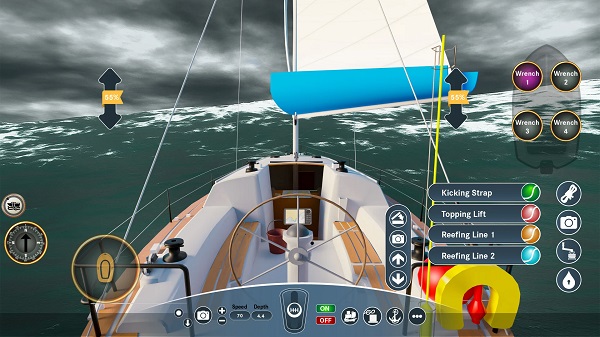
The developers prioritized authenticity over arcade-style simplicity. Ship handling reflects actual sailing physics, meaning you can’t simply point your bow toward a destination and expect progress. Wind direction, sail trim, and vessel characteristics determine your actual capabilities.
Core Gameplay Elements
Sailing Mechanics Foundation
Wind manipulation forms the heart of every voyage. Players adjust individual sails to capture wind effectively while maintaining the desired heading. The relationship between wind angle and vessel speed creates constant decision-making scenarios.
Different sail configurations serve specific purposes during various conditions. Square-rigged vessels excel with following winds but struggle against headwinds. Fore-and-aft rigged ships offer better upwind performance with reduced speed. Understanding these trade-offs becomes second nature after several voyages.
Tacking and wearing represent essential maneuvers for changing direction. These techniques allow sailing against prevailing winds through zigzag patterns. Timing these turns poorly risks losing momentum or damaging rigging.
Weather System Complexity
Dynamic weather patterns influence every voyage significantly. Clear conditions provide predictable sailing, while storms test your preparation and seamanship. Wind speed varies from calm periods requiring patience to gale conditions demanding reduced sail.
Cloud formations and barometric readings offer early warning signs. Experienced captains learn to recognize approaching weather changes and adjust plans accordingly. Ignoring weather indicators leads to damaged vessels or failed voyages.
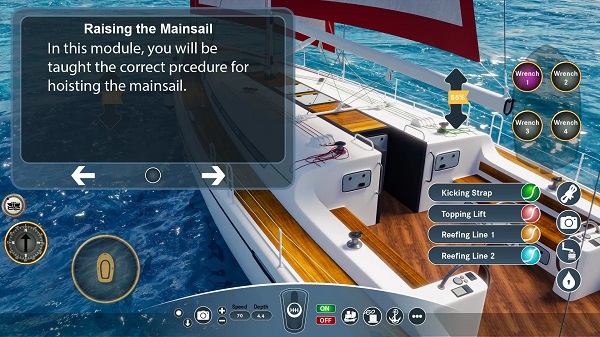
Visibility affects navigation accuracy. Fog obscures landmarks and other vessels, requiring compass work and dead reckoning skills. Night sailing adds another challenge with limited visual references.
Navigation Systems
Traditional navigation tools replicate historical methods accurately. Your compass provides heading information while charts show coastlines and hazards. Celestial navigation becomes available on certain vessels, adding depth for players seeking maximum realism.
Landmarks guide coastal navigation effectively. Recognizing harbor entrances, lighthouses, and geographical features helps during approaches. Open ocean passages require more careful planning and position estimation.
Currents affect your actual track compared to the compass heading. Strong tidal flows near coastlines can push vessels off course. Smart captains account for current effects when planning routes.
Vessel Types and Characteristics
Historical Ship Categories
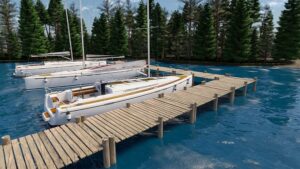
The simulation includes various vessel types from different maritime eras. Small sloops offer a manageable introduction to sailing mechanics with simplified rigging. These nimble craft respond quickly to sail adjustments and forgive minor mistakes.
Brigantines combine square and fore-and-aft rigging for versatility. These medium-sized vessels handle diverse conditions reasonably well. Cargo capacity increases while maintaining acceptable maneuverability.
Full-rigged ships represent the pinnacle of sailing complexity. Multiple masts with extensive square rigging provide impressive speed in favorable winds. Crew management becomes essential, as handling these vessels alone proves extremely challenging.
Ship Customization Options
Vessels support various upgrades affecting performance characteristics. Hull modifications improve speed or cargo capacity based on chosen enhancements. Better sails capture wind more efficiently, while reinforced rigging survives storms more reliably.
Cargo hold configurations balance trade goods capacity against sailing performance. Heavily loaded ships sit lower in the water, affecting handling qualities. Finding optimal loading for specific trade routes requires experimentation.
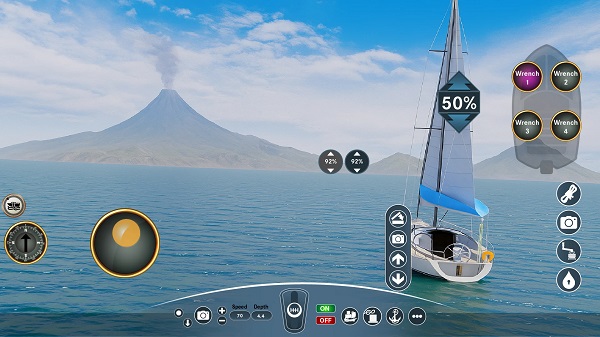
Navigation equipment upgrades provide improved accuracy and functionality. Quality compasses reduce deviation, while detailed charts reveal additional information. These improvements prove valuable during challenging voyages.
Getting Started with Sailing Ship Simulator
Installation Process
Download Sailing Ship Simulator through the Google Play Store for Android devices or the App Store for iOS platforms. The application requires approximately 320MB of storage space. Initial loading prepares detailed ship models and ocean environments. Android version 7.0 or higher ensures compatibility. Devices with 4GB RAM provide smooth performance during complex weather scenarios.
Sailing Ship Simulator Download
Tutorial Experience
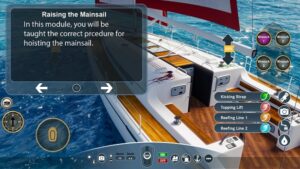
Opening missions teach fundamental sailing concepts through guided scenarios. You’ll practice basic sail management, simple navigation, and docking procedures in protected waters. These exercises build essential skills before venturing into open seas.
Tutorial completion unlocks free sailing mode and trading systems. Rushing through training limits understanding of important mechanics. Spending extra time mastering wind angle concepts here prevents frustration later.
Understanding the Interface
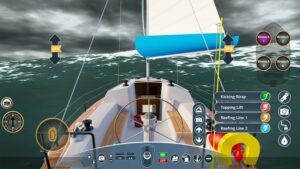
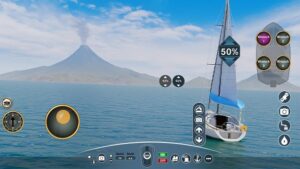
The main view shows your vessel with the surrounding ocean environment. Sail controls appear along screen edges for quick access. Wind indicators display the current direction and strength constantly.
The navigation map reveals your position, nearby ports, and known hazards. Cargo management screens show current goods and their values at different locations. Information presentation maintains clarity without overwhelming newcomers.
Initial Strategy Recommendations
Start with smaller vessels during early voyages. These ships forgive learning mistakes while teaching core principles. Attempting advanced vessels prematurely creates overwhelming complexity.
Practice basic maneuvers repeatedly before attempting long voyages. Tacking drills in open water build muscle memory for critical situations. Emergency sail reduction practice prepares you for sudden weather changes.
Choose short trade routes initially. Quick trips between nearby ports provide immediate feedback on your decisions. Gradually extend voyage distances as comfort levels increase.
Progression Systems and Features
Trading Economy Structure
Port economies drive the simulation’s progression system. Each location produces specific goods while demanding others. Price differences between ports create profit opportunities for observant traders.
Supply and demand fluctuate based on simulated economic factors. Flooding markets with particular goods reduces prices temporarily. Smart trading requires tracking multiple port economies simultaneously.
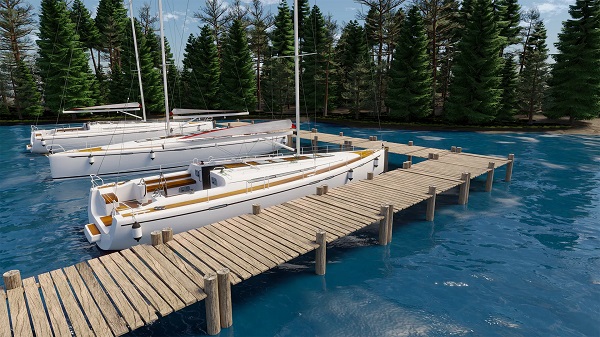
Reputation grows with successful deliveries and careful seamanship. Higher reputation unlocks better cargo contracts and vessel purchase opportunities. Damaging port facilities or failing contracts harms your standing.
Sailing Ship Simulator for Android
Career Advancement
Starting as a small vessel operator, you gradually build capital for larger ships. Each vessel purchase represents a significant investment requiring careful consideration. Operational costs include crew wages, maintenance, and port fees.
Mission contracts provide structured objectives beyond simple trading. Passenger transport, time-sensitive deliveries, and exploration tasks offer variety. Contract completion builds reputation faster than independent trading.
Achievement milestones reward specific accomplishments. Successfully navigating particularly difficult passages, surviving major storms, or completing trading chains unlock bonuses. These goals encourage exploring different gameplay aspects.
Fleet Management
Experienced captains can operate multiple vessels simultaneously. Fleet management adds strategic depth through coordinated trading operations. Assigning captains to other ships allows expanding the business scope significantly.
Fleet coordination requires balancing ship types against trade route characteristics. Fast vessels suit time-sensitive goods, while bulk carriers maximize profit on stable commodities. Building complementary fleet compositions increases overall efficiency.
Sailing Ship Simulator vs Other Maritime Games
Sea of Thieves
Both games feature sailing mechanics, but approach them differently. Sea of Thieves emphasizes multiplayer adventure with simplified sailing physics. Sailing Ship Simulator offers a detailed single-player simulation with authentic mechanics.
Combat plays a central role in Sea of Thieves, while Sailing Ship Simulator focuses on trading and exploration. The social aspect differs significantly, with Sea of Thieves requiring crew coordination.
Assassin’s Creed Black Flag
Black Flag includes sailing segments within a larger action-adventure framework. Naval combat receives more emphasis than pure sailing simulation. Sailing Ship Simulator dedicates its entire gameplay to an authentic maritime experience.
Both games feature Caribbean settings and period vessels. Black Flag’s simplified sailing serves action gameplay, while Sailing Ship Simulator prioritizes realistic physics and navigation.
Ship Simulator Extremes
Ship Simulator Extremes covers modern vessels alongside historical sailing ships. The broader scope contrasts with Sailing Ship Simulator’s focused period approach. Modern navigation technology differs substantially from traditional methods.
Both simulations value accuracy, but Ship Simulator Extreme includes powered vessels. Sailing Ship Simulator’s exclusive focus on wind-powered craft creates deeper specialization in that area.
Why Players Choose Sailing Ship Simulator
Authentic Maritime Experience
The simulation delivers genuine satisfaction through mastering complex sailing principles. Players appreciate learning real nautical concepts applicable beyond gaming. Understanding how historical vessels actually operated adds educational value.
Peaceful Exploration Focus
Unlike combat-heavy maritime games, this simulation emphasizes contemplative voyaging. The experience suits players seeking relaxation through engaging challenges. Ocean travel provides meditative qualities while remaining mentally stimulating.
Strategic Trading Depth
Economic systems reward careful observation and planning. Finding profitable trade routes creates personal accomplishment without artificial progression gates. Market dynamics ensure variety across multiple playthroughs.
Sailing Ship Simulator Free
Skill Development Satisfaction
Improvement stems from understanding mechanics rather than grinding statistics. Mastering difficult maneuvers provides genuine pride. Veterans can tackle increasingly challenging conditions through developed skills.
Advantages and Drawbacks
Advantages
- Provides realistic sailing physics that teach actual nautical principles and historical vessel operation methods.
- Offers a deeply engaging trading economy with meaningful decisions affecting progression and profit potential.
- Creates a relaxing yet mentally stimulating experience suitable for players seeking thoughtful gameplay over reflexive action.
- Features beautiful ocean environments with dynamic weather, creating varied atmospheric conditions.
- Respects player intelligence by avoiding hand-holding while providing necessary information for learning.
Drawbacks
- Requires patience and learning investment that may frustrate players expecting immediate mastery.
- Presents a steep initial learning curve as sailing concepts differ substantially from typical game controls.
- Contains limited combat or action elements for players seeking those gameplay types.
- Features a slower pacing that doesn’t suit brief gaming sessions or casual play periods.
- Lacks multiplayer features found in other maritime titles, focusing exclusively on solo experiences.
Final Assessment
Sailing Ship Simulator succeeds in delivering authentic maritime simulation through careful attention to historical accuracy and sailing physics. The experience rewards dedication with a genuine understanding of nautical principles while maintaining engaging gameplay through economic depth and exploration opportunities. While demanding more patience than arcade-style alternatives, it provides unmatched satisfaction for players genuinely interested in Age of Sail maritime operations and the contemplative nature of traditional seafaring.
Frequently Asked Questions
The simulation operates on Android devices running version 7.0 or newer and iOS devices running version 13.0 or higher. Devices with 4GB RAM provide optimal performance.
The base download provides complete core gameplay. Optional vessel packs and cosmetic flags exist but don’t affect simulation mechanics or trading systems.
Basic competency develops within 3-5 hours of practice. Advanced techniques for challenging conditions require approximately 15-20 hours of experience.
The simulation functions fully offline after initial download. No internet connection requirements exist for single-player sailing and trading activities.
The vessel selection spans primarily from the 1700s through the early 1800s, covering the golden age of sail with various ship types from that era.