Room 801
2 Hours Ago
40 MB
2.2
Android 5.0+
1M+
Images






Description
Walking down the same hallway for the hundredth time shouldn’t feel frightening. Yet somehow, in Room 801, every step carries weight. Your palms get sweaty. Your eyes scan every corner. That slight change in the lighting—was it always like that?
This game builds terror differently than what you might expect from horror titles. There are no chainsaws, no monsters chasing you through dark forests, no elaborate combat systems. Just you, a hallway, and the creeping realization that something feels wrong.
Understanding the Core Experience
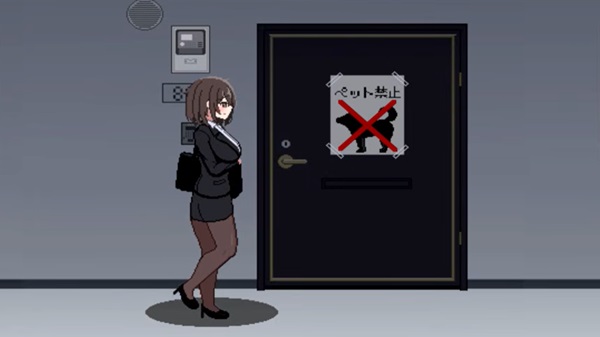
Room 801, known in Japan as 801号室 and often called Exit Floor 8, puts players in control of Yasaka Hiyori. She works at what locals call a “black company”—the kind of workplace that drains every bit of energy from its employees. Long hours, crushing expectations, and an atmosphere that makes burnout feel inevitable.

After another exhausting shift, Hiyori heads back to her company-provided apartment. All she wants is ramen and sleep. Simple enough, right? But when she tries to leave her room, something goes terribly wrong. A supernatural encounter forces her back to her doorway, and a mysterious woman delivers a single instruction that changes everything.
The rules sound straightforward: walk down the eighth-floor corridor toward the elevator. If something seems off, return to your room immediately. If everything looks normal, keep going. Get it right eight times, and escape becomes possible. Make the wrong call, and you’re back where you started.
What Makes Observation So Terrifying
The genius of this game lies in how it weaponizes familiarity. You walk through the same space repeatedly, memorizing every detail. The placement of doors. The pattern of floor tiles. The hum of fluorescent lights overhead. Your brain builds a mental map of what “normal” looks like.
Then the game starts changing things. Sometimes, obviously, a door that was closed now stands wide open. Sometimes subtly—a poster that might have shifted a few inches to the left. Or maybe it didn’t shift at all, and you’re just seeing things because the stress is getting to you.

This uncertainty becomes its own form of horror. Traditional scary games tell you when to be afraid. A monster appears. Music swells. Your character’s breathing gets heavy. Room 801 forces you to figure it out yourself. Was that change real? Should you turn back? Or will retreating when nothing’s wrong reset your progress?
Environmental Storytelling Done Right
The eighth-floor corridor tells a story without saying much. It’s a liminal space—the kind of area you’d normally pass through without thinking twice. Apartment buildings have thousands of these corridors. Unremarkable. Functional. Forgettable.
But isolation changes everything. When you’re the only person walking these halls, when every sound echoes louder than it should, when the fluorescent lights buzz with that particular frequency that makes your teeth hurt—suddenly, this ordinary space becomes oppressive.
The developers understood something important: the scariest locations are often the ones that should feel safe. Your apartment building. The hallway outside your door. These are spaces where you’re supposed to feel secure, where nothing bad is meant to happen. When that security gets violated, the discomfort goes deeper than any haunted mansion ever could.
The Loop That Never Quite Repeats
Repetition serves as both a mechanic and a metaphor. Every loop through the corridor should make you more confident. You know this space now. You’ve memorized its layout. Nothing should surprise you anymore.
Except the game keeps proving you wrong. Just when you think you’ve seen all the possible variations, something new appears. Or worse, something disappears. An object you swore was there simply vanishes, and you’re left wondering if it was ever there to begin with.

This design choice mirrors Hiyori’s emotional state. She’s stuck in a loop of her own making—the daily grind of work, home, work, home. Each day looks like the last, but small things change. Friendships fade. Energy depletes. The person you were last month isn’t quite the person you are today. The game captures that slow erosion of self through its repetitive structure.
Some players finish in fifteen minutes. Others take an hour or more. The length depends entirely on your observation skills and willingness to trust your instincts. There’s no filler content padding the runtime. Every moment serves the experience.
Pixel Art That Punches Above Its Weight
Visual simplicity works in this game’s favor. The pixel art style strips away unnecessary detail, forcing you to focus on what matters. Character designs are straightforward. Background elements are clean and readable. Nothing competes for attention except the things that actually matter—the anomalies you need to spot.
The limited color palette reinforces the oppressive atmosphere. Muted tones dominate most scenes, creating a sense of drabness that mirrors Hiyori’s daily existence. When color does appear, it stands out dramatically, signaling that something demands your attention.
Lighting plays a crucial role. The way shadows fall across the corridor changes subtly between loops. Sometimes these changes indicate anomalies. Other times, they’re just natural variation. Learning to tell the difference becomes part of the challenge.
Sound Design That Gets Under Your Skin
What you hear matters as much as what you see. The game relies heavily on ambient noise rather than traditional music. The hum of lights. The distant sound of footsteps. The creak of settling wood. These background noises create texture and mood without overwhelming the experience.
Silence becomes its own form of tension. In the quiet moments between sounds, your brain fills in the gaps. You start hearing things that might not be there. Or maybe they are there, and you’re just not sure yet. This uncertainty keeps you constantly alert, constantly listening for the next clue.
When audio cues signal anomalies, they’re often subtle enough that you might miss them if you’re not paying attention. A door that rattles slightly. A vent that drips when it shouldn’t. The game rewards careful observation without holding your hand.
Multiple Paths to Different Endings
Your choices throughout the game determine which conclusion you reach. Some endings feel satisfying. Others leave you with more questions than answers. This ambiguity fits the overall tone—Room 801 isn’t interested in spelling everything out for you.
Replaying reveals new details. Anomalies you might have missed on your first run. Story elements that take on a different meaning when you see them twice. The game encourages multiple playthroughs, not through artificial padding, but through genuine curiosity about what else might be hiding in those corridors.

An unlockable mode lets you revisit previously discovered anomalies, which helps if you’re trying to experience everything the game offers. For players who enjoy hunting down every secret and exploring every possibility, this feature extends the experience beyond that initial escape attempt.
Who Will Connect With This Experience
This game asks for patience and attention. If you prefer constant action or elaborate gameplay systems, it might not click. The experience is contemplative, focused, and intentional. You succeed by observing and making thoughtful decisions, not by quick reflexes or combat skills.
Fans of psychological horror will find plenty to appreciate. The game explores themes of burnout, isolation, and the thin line between mental breakdown and supernatural occurrence. It treats these subjects with sincerity rather than using them as cheap plot devices.
Visual novel enthusiasts might enjoy the narrative focus and decision-making elements. While Room 801 isn’t a traditional visual novel, it shares that genre’s emphasis on story and choice. The gameplay serves the narrative rather than competing with it.
The short length makes it easy to recommend. You’re not committing to dozens of hours. You can experience the core story in a single evening, decide whether it resonates with you, and either move on or dive back in for additional playthroughs.
The Weight of Workplace Culture
Beneath the supernatural horror lies social commentary. The “black company” setting isn’t just background flavor—it’s central to understanding what’s happening. These workplaces, known for exploiting employees to the point of physical and mental collapse, create their own kind of horror.
Hiyori’s exhaustion isn’t just tiredness. It’s a deep-seated depletion that comes from working in a system designed to extract everything from you while giving back as little as possible. Her isolation mirrors the disconnection many workers feel when their entire lives revolve around their jobs.

The game asks whether the supernatural events are real or symptoms of a mental breakdown caused by unsustainable work conditions. Maybe both are true simultaneously. The answer matters less than the question itself—what happens to people when their environment becomes toxic enough that they can’t tell reality from hallucination?
Technical Accessibility Across Platforms
Room 801 runs on various devices without demanding high-end hardware. The pixel art style and focused scope mean even modest systems can handle it smoothly. Mobile versions work particularly well for this type of experience—short sessions with clear stopping points fit naturally into the format.
Controls remain simple regardless of platform. You move forward, observe your surroundings, and make choices. No complex button combinations. No timing-based challenges. The mechanics stay out of the way, letting you focus on the core experience of observation and decision-making.
Touch controls for mobile platforms feel natural and responsive. The game was designed with this control scheme in mind, so nothing feels awkward or compromised on smaller screens.
Final Impressions
Room 801 succeeds by understanding what makes psychological horror effective. It doesn’t need elaborate production values or shocking imagery to create genuine unease. The game trusts your imagination, gives you space to become invested in the mystery, and respects your intelligence enough to let you piece together what’s happening.
The repetitive gameplay loop could have become boring. Instead, it becomes the source of the game’s tension. Each trip down that corridor feels different, even when nothing has changed, because your mental state keeps shifting. The pressure builds. The doubt accumulates. By the end, you’re questioning everything, including your own perceptions.
Not everyone will appreciate this approach to horror. Some players want more explicit scares or complex gameplay systems. But for those willing to engage with Room 801 on its own terms, the experience offers something distinct from typical horror games. It’s quiet horror. Contemplative horror. The kind that sticks with you after you’ve finished playing because it tapped into something deeper than simple shock value.
The game proves that horror doesn’t require massive budgets or cutting-edge technology. Sometimes all you need is a hallway, some subtle changes, and the creeping suspicion that something isn’t quite right. Everything else—the fear, the tension, the paranoia—your mind supplies on its own.