City Smash
2 Hours Ago
75 MB
1.7.9
Android 5.0+
1M+
Images



Description
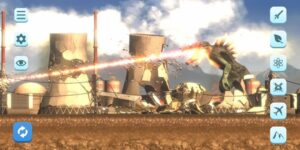
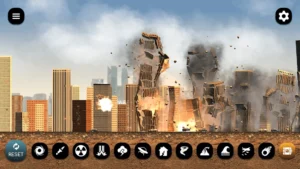
Looking for a mobile experience that lets you unleash chaos? City Smash delivers an engaging sandbox environment where you control devastating forces to level entire metropolitan areas. This physics-based destruction simulator has captured attention for its realistic building collapse mechanics and extensive weapon selection.
What Makes City Smash Stand Out?
City Smash represents a sandbox destruction simulator designed for mobile platforms. Created by Paradyme Games, the title transforms your device into a playground of catastrophic events. The core concept centers on experimenting with various destructive tools while observing how structures react to different forces.
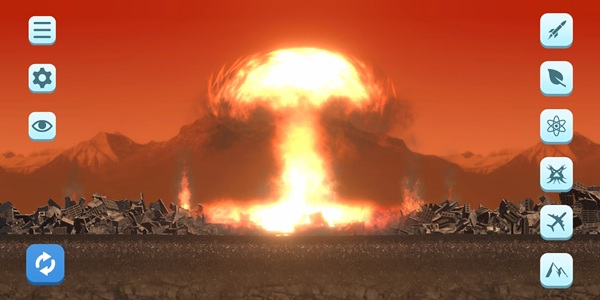
The appeal stems from watching realistic physics interactions. Buildings don’t simply vanish when hit—they crumble, break apart, and collapse in believable ways. Debris scatters across streets, vehicles get swept into chaos, and secondary damage creates chain reactions that amplify the devastation.
Unlike typical mobile games demanding specific objectives or completion requirements, this experience provides complete freedom. No storyline restricts your actions. No progression gates block weapon access. Everything becomes available immediately, encouraging experimentation from the first moment.
Core Gameplay Mechanics
Physics-Based Destruction System
The foundation rests on authentic physics calculations. When you trigger a missile strike, the impact point determines collapse patterns. Buildings break at structural weak points rather than disappearing uniformly. Glass shatters before concrete crumbles. Support beams buckle under pressure, causing upper floors to pancake downward.
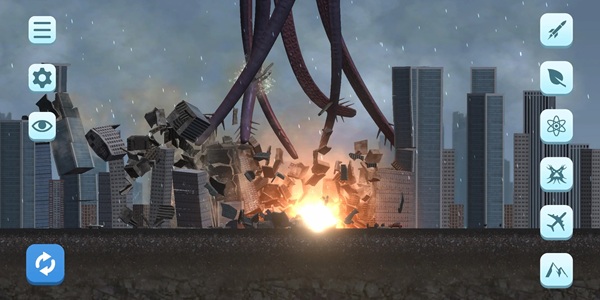
This attention to physical behavior creates satisfying visual feedback. Watching a skyscraper slowly tilt before toppling sideways differs completely from seeing it implode from explosive charges. Each weapon type produces distinct destruction patterns worth studying.
Extensive Weapon Arsenal
Players access many destructive tools spanning multiple categories:
- Conventional Weapons: Missiles provide targeted strikes with explosive force. These work well for precision demolition of specific structures. Watching missiles arc through the sky before impact adds anticipation to each deployment.
- Natural Disasters: Tornadoes tear through city blocks with swirling destruction. Earthquakes shake foundations until buildings crumble. Volcanoes erupt with lava flows that consume everything nearby. Tsunamis create massive flooding that sweeps away vehicles and structures.
- Laser beams slice through structures with focused energy. Lightning strikes ignite fires that spread across damaged areas. UFOs and alien creatures add science fiction elements to the chaos.
- Experimental Tools: Gravity beams lift objects before slamming them down. Portals create dimensional rifts. Cluster bombs scatter smaller explosives across wide areas. Fireworks provide colorful, less intense destruction options.
Available Maps and Environments
Standard City Layout
The primary map features a dense urban environment with varied building types. Skyscrapers tower over smaller commercial structures. Residential areas contain shorter buildings. Streets fill with moving vehicles that become additional destruction elements.
The diversity creates different demolition challenges. Tall buildings provide satisfying collapses, while clustered smaller structures test weapon spread effectiveness. Vehicle traffic adds unpredictable secondary damage as cars crash and burn.
Bridge and Highway Map
This variation introduces infrastructure elements. A large bridge spans water, creating structural vulnerability different from standard buildings. Highway sections feature moving traffic patterns. The water below responds to falling debris, though splash effects remain minimal.
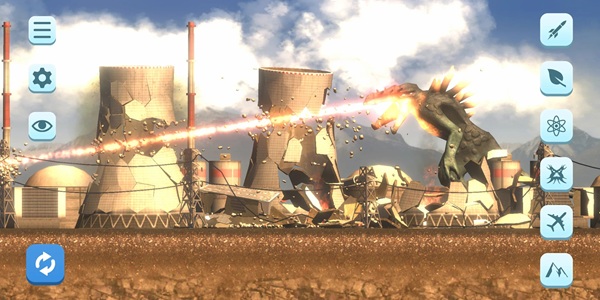
Destroying the bridge tests understanding of structural support points. Removing key sections causes dramatic collapses that differ from vertical building demolition.
Military Installation
Some versions include defended locations where military assets respond to threats. Tanks and helicopters actively engage certain weapons, adding reactive elements to otherwise passive destruction.
This map introduces a challenge beyond simple demolition. Neutralizing defenses becomes necessary before freely destroying structures, creating a different gameplay rhythm.
Getting Started
Installation Requirements
City Smash runs on Android devices with version 6.0 or higher. iOS compatibility requires version 13.0 or later. Storage demands remain modest at roughly 85MB, making installation manageable for most devices. Performance works smoothly on devices with 3GB RAM, though lower specifications may experience occasional slowdown during intensive destruction sequences.
Understanding the Interface
The layout prioritizes simplicity. Weapon selection icons appear along screen edges, typically left or bottom placement. Tapping an icon activates that weapon. Touch the screen to deploy the selected destruction tool at that location.
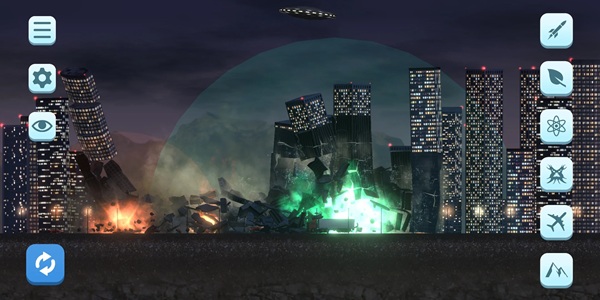
Some weapons require directional aiming. Missiles and meteors benefit from drag controls that set trajectory angles. Other tools, like earthquakes, activate wherever tapped without needing aim adjustments.
Map switching appears in menu options. Weather and time-of-day settings modify visual atmosphere without affecting physics. Statistics tracking shows cumulative damage across sessions, including building destruction counts and monetary damage estimates.
Strategic Experimentation Approaches
Layering Effects
Combining multiple disaster types creates compound destruction. Starting with an earthquake weakens structural integrity. Following with missiles finishes destabilizing buildings more efficiently than using either alone. Tornadoes pull apart earthquake-damaged structures in visually dramatic ways.
Testing these combinations reveals efficiency differences. Some pairings amplify damage dramatically while others produce minimal synergy. Finding effective combinations adds depth beyond random weapon selection.
Precision Demolition
Rather than causing maximum chaos, try targeted destruction. Can you topple a specific building without damaging neighbors? This self-imposed challenge requires understanding collapse directions and weapon characteristics.
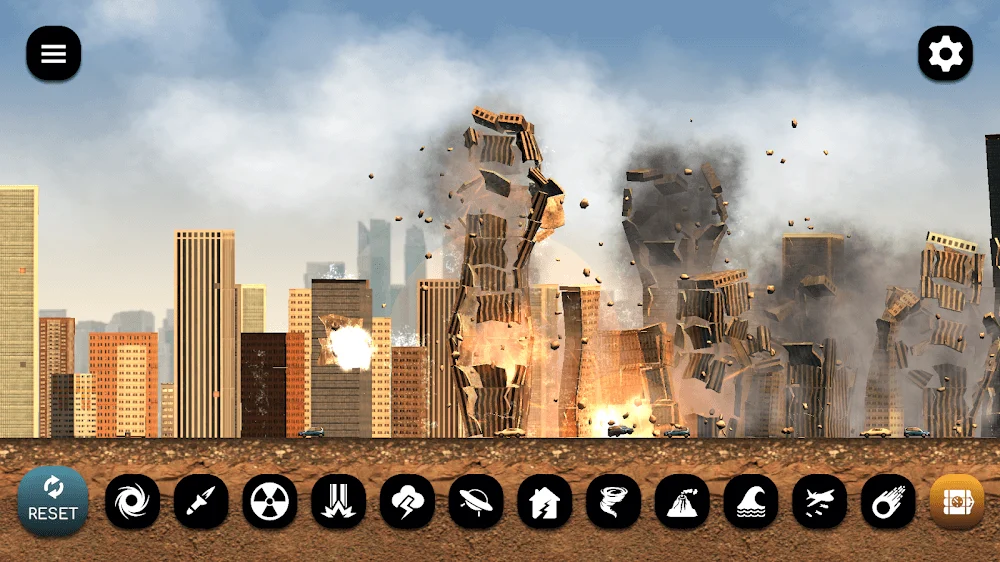
Missiles offer the most precision for this approach. Black holes provide interesting challenges since gravitational effects spread beyond impact points. Learning to use spread weapons for targeted goals develops different skills than total destruction strategies.
Observing Physics Interactions
The realistic physics system rewards careful observation. Notice how building materials respond differently. Glass facades shatter easily but don’t affect structural stability. Concrete sections crumble under pressure. Steel beams bend before breaking.
Secondary damage patterns emerge from these interactions. Falling debris crushes vehicles. Fire spreads between damaged structures. Understanding these cascading effects helps predict outcomes before deploying weapons.
Technical Performance Aspects
Graphics Quality
Visual presentation balances detail with performance. Buildings feature distinct textures that show damage states. Particle effects add impact to explosions and collapses. Lighting responds to time-of-day settings, creating atmospheric variety.
The 3D rendering maintains smooth frame rates during intense action. Even with multiple buildings collapsing simultaneously, performance remains stable on appropriate hardware. Lower-end devices can adjust graphics settings to maintain playability.
Physics Calculations
The destruction system handles numerous simultaneous objects without major slowdown. Breaking a skyscraper generates hundreds of debris pieces that interact realistically. Vehicles respond to impacts. Rubble piles accumulate believably.
This computational achievement impresses, considering mobile hardware limitations. The developers optimized calculations to maintain both visual appeal and responsive controls.
Comparison with Similar Titles
Solar Smash Connection
Paradyme Games also created Solar Smash, which applies similar destruction mechanics to planetary scales. The games share weapon types and physics approaches. However, City Smash focuses on closer, more detailed urban destruction while Solar Smash emphasizes orbital-scale devastation.
Players enjoying one title typically appreciate the other. The choice depends on preferred scale—intimate city destruction versus cosmic planetary annihilation.
Room Smash Variant
Room Smash narrows its focus to interior spaces. The same physics principles apply, but targeting furniture and household items rather than buildings. This creates a different intimacy level—destroying someone’s living room versus leveling city blocks.
The weapon arsenal adjusts for appropriate scale. Hand tools and household items replace missiles and black holes, though supernatural weapons still appear.
Monetization Approach
Free-to-Play Model
The complete weapon arsenal becomes available without purchase. No progression gates require payment. This generous approach removes common frustrations where meaningful content hides behind paywalls.
Advertising Implementation
Occasional advertisements appear between destruction sessions, typically after resetting the map multiple times. The frequency remains reasonable—roughly every fourth reset. No banner advertisements clutter the interface during gameplay.
An option exists to remove advertisements through purchase, though the base experience remains completely playable without this upgrade.
Cosmetic Options
Optional visual customizations exist but don’t affect gameplay mechanics. These provide revenue without creating competitive advantages or restricting destruction capabilities.
Stress Relief Benefits
Many players report therapeutic effects from controlled virtual destruction. The ability to unleash dramatic forces without real consequences provides emotional release. Watching structures crumble offers tangible results that satisfy demolition urges safely.
The lack of failure states removes performance pressure. You cannot lose. Experimentation carries no penalty. This freedom creates relaxing engagement despite chaotic visuals.
Community Feedback Patterns
Commonly Praised Elements
Players consistently appreciate the immediate weapon availability. No grinding required to access interesting tools. The physics quality receives frequent positive mentions—destruction feels believable rather than artificial. Performance optimization earns recognition for smooth operation across device ranges.
The non-intrusive advertising model generates appreciation. Players value experiencing complete content without constant purchase prompts or restrictive timers.
Requested Improvements
Common suggestions include expanding environmental interaction. Players want ground deformation from impacts—nuclear craters, for example. Water physics improvements appear frequently, with requests for better splash effects and wave generation.
Map variety requests emerge regularly. Players desire additional environments beyond current offerings. Urban density variations, different architectural styles, and natural settings would expand replayability.
Controllable disasters receive attention. Rather than simply triggering tornadoes, players want directional control. Volcano eruption intensity adjustments would add customization. These suggestions reflect the desire for deeper interaction with destruction tools.
Final Assessment
City Smash succeeds as a focused destruction simulator that prioritizes physics authenticity and player freedom. The generous content access, combined with satisfying demolition mechanics, creates an engaging experience for those seeking virtual devastation without competitive pressure.
The realistic building collapse behavior sets it apart from simpler destruction games. Weapon variety prevents repetitive gameplay, while physics interactions reward experimentation. Performance optimization ensures accessibility across device types.